


Discover Tamil Nadu
DISCOVER TAMIL NADU
Duration: 7 Nights/8 Days
Places: Chennai → Mammalapuram → Pondicherry → Tanjore → Karaikudi → Madurai → Kanyakumari → Trivandrum

Day 1: Chennai
The fourth largest city in India, Chennai is the seat of culture and learning in South India. It is also India’s third largest commercial and industrial centre, as well as the automobile capital of India. Situated on the Coromandel Coast of the Bay of Bengal, it is a city famous for its beaches, historical monuments and its rich cultural heritage. It is home to one of the world’s longest beaches, the 12 km long Marina Beach. Chennai, formerly known as “Madras”, has a rich and historical past to explore.
Day 2: Mamallapuram
Mahabalipuram or Mamallapuram, an important World Heritage site, was an ancient port city on the Coromandel coast built by the Pallava Dynasty in the 7th century. It was named after the cruel demon king Mahabali, who was slayed by Goddess Durga. It is known for its beautiful historical monuments that were built mostly during the Pallava Dynasty in the form of rock cut caves and temples. Its beautiful and un-spoilt beaches stretching for miles and lined by groves of casurinas is another great attraction. The Group of Monuments at Mahabalipuram has been classified as a UNESCO World Heritage Site


Day 3: Pondicherry
Pondicherry was under the French rule for nearly 281 years. It still has its French flavor with its grand colonial mansions, beautiful boulevards, placid promenades, French street signs, buildings and public places.
Auroville, founded in 1968, is an International township located 6 kms from Pondicherry. It was conceived as a utopian paradise by the Mother, the spiritual successor of Sri Aurobindo. The idea was to build a futuristic city where people of goodwill would live together in peace and harmony. The Matrimandir (Temple of the Mother) is situated at the centre of Auroville.
Day 4: Tanjore
Thanjavur or Tanjore, is well-known throughout the world for being the home of the Brahadeeswara temple. The temple is enclosed in two courts, surmounted by a lofty tower and includes the exquisitely decorated shrine of Subrahmanya. Among the other historic buildings is the Vijayanagar fort, which contains a palace that was expanded by the Maratha king with an armoury, a Bell Tower and the Saraswathi Mahal Library, which contains over 30,000 Indian and European manuscripts written on palm leaf and paper.


Day 5: Karaikudi
Situated in the Sivaganga district of Tamil Nadu between Trichy and Rameshwaram, Karaikudi is the biggest city in Chettinad and is famous for its Ganesha temple, saris, distinctive cuisine and majestic mansions. Comprising about 72 villages of which many of them were once the homes of wealthy merchant families known as the Chettiars, today, it is an area of mostly deserted splendid mansions. The place derives its name from the famous plant “Karai” which abounds in the area.
Day 6: Madurai
Madurai was the capital city of the Pandya kings of South India and has functioned as an important commercial center as early as 550 AD. The Meenakshi-Sundareswarar temple, which stands today as one of India’s cultural and architectural landmarks, was originally built by the early Pandya King Kulasekara. The ancient city of Madurai was supposed to be laid out in a lotus-like formation. Legend has it that on the day the city was to be named, Lord Shiva blessed the land and its people while divine nectar showered on the city from his matted locks. The city hence came to be known as “Madhurapuri” meaning “The City of Divine Nectar”.


Day 7: Kanyakumari
The coast town of Kanyakumari (Cape Comorin) lies at the southernmost tip of India where the Arabian Sea, Bay of Bengal and the Indian Ocean meet. It has been an important centre for art, religion and trade for centuries. Flanked by hills and paddy fields on one side and the ocean on the other, Kanyakumari is the ‘Land’s End’ of India. Beautiful beaches with multi-coloured sands, spectacular sunrises and sunsets, and ancient temples with a rich architectural heritage make this coastal town a popular tourism destination.
Day 8: Trivandrum
Transfer to Trivandrum and proceed to onward destination.


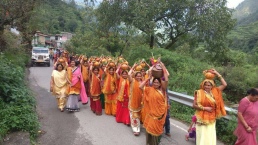
Janmashtami
Janmashtami
Janmashtami – littéralement « la naissance du huitième (Avatar de Vishnu) » est l’anniversaire de Sri Krishna, dieu très populaire en Inde.
C’est une fête qui honore non seulement sa naissance, mais également ses révélations mystiques dans le Bhagavat Gita, sa vie dans le Bhagavata Puruna et le dévouement qu’il éveille chez ses disciples à travers le monde. C’est un jour de grande dévotion et de processions impressionnantes.
Sri Krishna est un personnage extrêmement important pour la psyché indienne et pour l’héritage spirituel indien. Il est adoré à la fois comme le petit garçon charmant de Vrindavan, le joueur de flûte ravissant, le danseur gracieux, l’amant irrésistible et le guerrier vaillant. Nous souhaitons à tous un très joyeux Janmashtami!
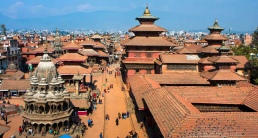
Discover Nepal
NEPAL
Duration: 8 Nights/9 Days
Places: Kathmandu → Chitwan → Lumbini → Pokhara → Kathmandu

Day 1: Kathmandu
Half day sightgseeing tour of Pashupatinath & Boudhanath.
Situated at 5 kms east of Kathmandu City, the Pashupatinath temple is one of the holiest temples dedicated to Lord Shiva. Nestled amidst a lush green natural setting on the bank of the sacred Bagmati river, the temple built in pagoda style has a gilted roof and richly carved silver doors. The Bodhnath Stupa, at 8 kms east of Kathmandu City, is one of the biggest in the world of its kind. It stands with four pairs of eyes in the four cardinal directions keeping a watch for righteous behaviour and human prosperity.
Day 2: Kathmandu City
Halfday sight-seeing tour of Kathmandu city and Swayambhunath.
Known as Kantipur, Kathmandu City is the capital of the Kingdom of Nepal. Here you will visit the temple of the Living Goddess who acknowledges the greetings of the devotees from the balcony of her temple residence. Located at approximately 4 kms away from the city, the Swayambhunath Buddhist Stupa is said to be 2000 years old. The Stupa which forms the main structure is composed of a solid hemisphere of brick and earth supporting a lofty conical spire capped by a pinnacle of copper gilt.


Day 3/4: Chitwan
Drive to Chitwan which will take 6 to 7 hrs under normal road conditions.
CHITWAN
The Royal Chitwan National Park, the lush Valley of Chitwan situated in the foothills of Churia ranges, is 150 kms South West of Kathmandu and houses the first National Park of the Kingdom. The Royal Chitwan National Park is famous or its variety of Wildlife especially the Great Indian One horned Rhinoceros and the elusive Royal Bengal Tiger. Experience the wild variety of jungle activities during your stay here.
Day 5: Lumbini
Half day sightseeing tour of Lumbini.
Siddhartha Gautama, the Lord Buddha, was born in 623 B.C. in the famous gardens of Lumbini, which soon became a place of pilgrimage. Among the pilgrims was the Indian emperor Ashoka, who erected one of his commemorative pillars there. The site is now being developed as a Buddhist pilgrimage centre, where the archaeological remains associated with the birth of the Lord Buddha form a central feature.


Day 6/7: Pokhara
Leave for Pokhara, which takes approximately 6 hours by drive
The rare combination of snow-clad peaks and snow fed lakes and rivers has helped to make the valley of Pokhara (210 kms from Kathmandu) one of the most picturesque natural attractions in the kingdom. Located in the centre of Nepal, there may be no other place in the world from where the Great Himalayas peaks can be admired from such a close distance. The Bindhyavasani Temple on its well-kept platform overlooks a modest amusement park.
Day 8: Kathmandu
Leisurely drive back to Kathmandu. Arrive Kathmandu and transfer to hotel. Overnight at hotel.
Day 9:
Breakfast at hotel. Proceed to International Airport to connect for onward flight/destination.
