


Discover Egypt
DISCOVER EGYPT
Duration: 9 Nights/10 Days
Places: Cairo → Aswan → Kom Ombo → Edfu → Esna → Luxor → Cairo
Day 1-3: Cairo
Cairo is the capital of Egypt and is one of the largest cities in both Africa and the Middle East. It is also the 19th largest city in the world, and among the world’s most densely populated cities. Situated along the Nile river, Cairo is famous for its own history, preserved in the fabulous medieval Islamic city and Coptic sites in Old Cairo. The Egyptian Museum in the centre of town is a must see, with its countless Ancient Egyptian artifacts, as is shopping at the Khan al-Khalili bazaar. Visit the Giza Pyramids, the nearby Saqqara Pyramid Complex, where visitors will see Egypt’s first step pyramid built by the architect Imhotep for the third dynasty Pharaoh, Djoser.
Day 4: Aswan
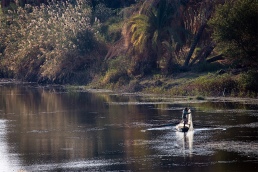
Egypt’s sunniest southern city and ancient frontier town located about 81 miles south of Luxor, Aswan has a distinctively African atmosphere. Small enough to walk around and graced with the most beautiful setting on the Nile, the pace of life is slow and relaxing. Days can be spent strolling up and down the broad Corniche watching the sailboats etch the sky with their tall masts or sitting in floating restaurants listening to Nubian music and eating freshly caught fish. Explore the souk, full of the scent and color of spices, perfumes, scarves and baskets.
Day 5: Aswan/Kom Ombo
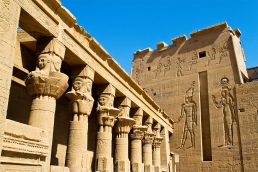
Kom Ombo is an agricultural town in Egypt famous for the Temple of Kom Ombo. It became a Greek settlement during the Greco-Roman Period. The temple at Kom Ombo is about 48 km north of Aswan and was built during the Graeco-Roman period (332 BC – AD 395). There was an earlier structure from the 18th dynasty but little remains. The temple is unique because it is in fact a double temple, dedicated to Sobek the crocodile god, and Horus the falcon-headed god. The layout combines two temples in one with each side having its own gateways and chapels.
Day 6: Edfu/Esna
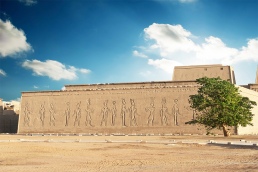
Edfu is located on the west bank of the Nile River between Esna and Aswan. The Temple of Horus in Edfu is considered the best-preserved cult temple in Egypt. It also reflects traditional pharaonic architecture and so provides an excellent idea of how all the temples once looked.
Esna, which was ancient Iunyt or Ta-senet, was built on the site of a major temple dedicated to the god Khnum. Besides Khnum, the temple was dedicated to several other deities, the most prominent of whom were Neith and Heka.
Day 7/8: Luxor
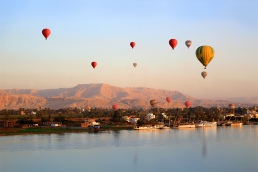
Located in Upper Egypt, Luxor has been described as the world’s biggest open air museum. It has been estimated that Luxor contains about a third of the most valuable monuments and antiquities in the whole world, which makes it one of this planet’s most important tourism sites. There are various important monuments to be seen: The Luxor Temple, Karnak Temple, the Valley of the Kings, the Valley of the Queens, Deir El-Bahri (the Mortuary Temple of Hatshepsut), the workers village at Deir El-Medina, etc. It was the religious capital for almost all of the Pharaonic period which is why the town is dominated by the two temples.
Day 9: Cairo
Transfer to Cairo and proceed to onward destination.


North India | Golden Triangle
GOLDEN TRIANGLE
Duration: 4 Nights/5 Days
Places: Delhi → Agra → Jaipur → Delhi

Day 1: New Delhi
The capital of India overwhelms one with its temples, mosques, forts, colonial mansions and busy streets. Delhi has two distinct parts – Old Delhi and New Delhi. Old Delhi being the 17th century capital of the Moghul Empire has many Mughal Architecture places, forts and mosques including the Red fort & Jami Masjid. New Delhi was established as the capital of British India in 1911 and consists of planned, wide streets interspersed with parks and fountains.
Day 2: Agra
Taj Mahal, one of the Seven Wonders of the World is synonymous to Agra. The very first sight of this ‘Poetry in White Marble’ leaves one mesmerized. Mughal Emperor Shah Jahan constructed this monument in the memory of his beloved wife Mumtaz Mahal. “This epitome of love”, is a monument of immeasurable beauty beyond human expression. Agra is also home to two other heritage monuments – The Agra Fort and Fatehpur Sikri.

Day 3/4: Jaipur
Jaipur, the Pink City founded by Maharaja Jai Singh II (1693-1743), is the capital of Rajasthan. Jaipur is surrounded on all sides by rugged hills crowned with forts & enclosed by embattled walls. Houses with latticed windows line the streets with their rose pink colour, lending enchantment to the scene which is almost magical at sunset. Jaipur and its surroundings are like an endless museum. The city also offers a variety of crafts. Jewelers here still fashion the beautiful enamel-on-gold pendants, studded on the reverse with precious stones or pearls & turquoise that one sees in miniature paintings. Jaipur’s lacquer bangles are famous all over the world.
Day 5: New Delhi
Transfer to New Delhi and proceed to onward destination.

Discover Gujarat

Day 1/2: Ahmedabad
Popularly known as the Manchester of the East, Ahmedabad boasts of the largest denim production in the world. Many of Ahmedabad’s buildings bear the signatures of world-renowned architects like Le Corbusier, Louis Khan , Doshi and Correa. It is from here that Mahatma Gandhi launched his famous Dandi March, as a protest against the Salt Tax and gave human race the non-violent way of fighting oppression. Set upon the Sabarmati riverside the city is filled with a delightful range of tourist attractions. Ahmedabad is split into the old quarter and new urban spaces and offers visitors a variety of enriching holiday experiences.
Day 3/4: Bhavnagar
Bhavnagar lies in the southeast corner of the peninsular region of Gujarat known as Kathiawad or Saurashtra. Once the capital of a princely state, Bhavnagar is home to several lakes and temples. For the tourists, Bhavnagar serves as a convenient base to visit the Jain temples of Palitana on the Shatrunjaya hills and the Velvadar Sanctuary, the home of the famous Indian Black buck. Bhavnagar was found in 1743 A.D. by Bhavsinhji Gohil, near the small village of Vadva. It was once a flourishing port but today the only activity related to the port is at Alang and Ghogha. Alang is well known for the largest ship breaking yard in Asia.


Day 5/6: Junagadh
Junagadh also known as ‘Sorath’ is an ancient fortified city, situated at the foot of the Girnar Hills. Junagadh literally translated means the “old fort”. The fort which circles the medieval town is popular for its Buddhist caves and 2 step wells known as “Adi Kadi ni vaav” and “Navghan kuvo”. The journey to the top of Girnar Hills is considered holy by the Jains and Hindus. ‘Girnar’ has 5 major peaks and 9999 steps to reach the top. The history of Mount Girnar dates back to the awesome empire of Ashoka, one of India’s greatest emperors. Ashoka inscribed 14 edicts on a huge boulder during his journey to the Mt. Girnar Peak.
Day 7: Sasangir
Sprawling in an area of 1424 sq. km., the wildlife sanctuary of Sasangir is home to the endangered Asiatic Lion. The dry and deciduous forest has a rich ecosystem endowed with flora and fauna. Thirty species of mammals, twenty species of reptiles, several species of insects and birds are found here. Gir forest is the only place in the world outside Africa, where the lion can be seen in its natural habitat. A safari in this forest can be one of the rare and delightful moments of life, as one can spot the Lion in all its majesty.


Day 8/9: Dwarka
Located in the Saurashtran peninsula by the Arabian Sea, Dwarka is mentioned as the Golden city in ancient Hindu texts like the Gita and the Puranas. Steeped in legends associated with Lord Krishna, Dwarka is an important Hindu pilgrimage centre. The Dwarkadhish temple along the Ghats is the most famous landmark in the city. The five-storeyed temple stands on 60 pillars and its ‘Sikhar’ rises to 170 feet. The other temples in Dwarka are the Trikamji temple, Kalyanrai temple, the Patrani temple, Durvas temple, etc. It is believed that Dwarka was submerged into the sea six times and the modern day Dwarka is the seventh one.
Day 10: Rajkot
A large city of Saurashtra, Rajkot was an important city of the British Raj and a major princely state capital. The city has a number of impressive colonial buildings and educational institutions. It is famous for its Watson museum and association with Mahatma Gandhi who spent much of his childhood here. The city is also well known for its silver jewellery, woolen and cotton textiles, silk embroidery and bandhnis (tie & dye work).


Day 11/12: Bhuj
Bhuj is the administrative city of Kutch. The city has a unique heritage and culture with its small, meandering streets, palaces and temples. It has many villages around it that are famous for their traditional handicrafts and embroidery. Geographically, Bhuj has low hills overlooking the city and is known for its palaces built in the traditional Kutchi architectural styles. Among them, the Aina Mahal or the Palace of Mirrors is the most famous and one of its main highlights. The palace is surrounded by a small, fortified courtyard built in the 18th century located in the old part of the city. Prag Mahal, the museum within it, was built in the latter half of the 19th century.
Day 13: Ahmedabad
Transfer to the Ahmedabad and proceed to onward destination.

Discover Karnataka
DISCOVER KARNATAKA
Duration: 10 Nights/11 Days
Places: Bangalore → Mysore → Hassan → Hospet → Hampi → Badami → Goa

Day 1/2: Bangalore
Bangalore has been put on the international map by the immensely successful software industry. Bangalore is proud of its strongest traditions, the clamor of commerce, the serenity of vast green park lands, temples, quiet back lanes, bustling bazaars and dazzling shopping arcades all woven together in a mystic bond. The city offers plenty for sight-seeing like the ISKCON temple (Krishna temple), Lalbagh Gardens (Botanical Park), Vidhana Soudha (State Legislature and Secretariat Building), Bull Temple, Government Museum (acclaimed as one of the oldest museum in India), etc.
Day 3/4: Mysore
Former capital of the princely state, Mysore is Karnataka’s second largest city. It is the city of royal Palaces, sandalwood and silk. The city offers many fascinating markets, the Maharaja’s Palace and the Jaganmohan Palace (with an excellent painting section) and good museums. It might be a nice option to spend a morning or afternoon climbing up Chamundi Hill. Famous rock cuttings and temples along the way make this climb even worth more the effort. Mysore also boasts of one the oldest and most popular zoos in India.


Day 5: Hassan (Belur, Halebid & Shravanabelgola)
Hassan is located in the heart of Malnad and is a suitable base for those who want to visit the archaeological and religious sites of Belur, Halebid and Shravanabelgola, all situated in close vicinity. The Hoysala rule between 11th to 13th centuries has left a profound impact on the architectural and cultural legacy of the region and it was during this time that most of the legendary and renowned temples of Belur and Halebid were constructed. Its proximity to Sravanabelagola, a Jain pilgrimage centre, Hassan has been deeply influenced by Jainism and Jain philosophy and mythology can readily be seen in the sculptures, paintings and literary works of the region.
Day 6/7: Hospet & Hampi
Hospet, a small town in Northern Karnataka, was once the seat of the powerful Vijayanagar Empire (1336 – 1646). Its importance lies in its close proximity to Hampi, formerly the epitome of architectural wonders and a World Heritage Site. Hospet is the ideal base for tourists visiting Hampi and other nearby places. This glorious empire was ravaged by the Moghul invaders and the city was crushed and the entire kingdom was turned to ruins. The city today acts as repository of the prestigious remnants of the great Vijaynagar empire.

Day 8/9: Badami
Badami is known for its cave temples – all carved out of sandstone hills. The Badami Cave temple comprises of four caves: the third cave is dedicated to Lord Vishnu and is the largest and the most picturesque. The caves represent different religious sects. In front of the cave temple, there is a reservoir dotted with temples on its bank. Among them, two are dedicated to Lord Vishnu, one to Lord Shiva and the fourth is a Jain Temple. Badami Cave temples have some spectacular carving displaying the Hindu gods, Narashima and Hari Hara. The temples also have paintings on the ceiling and interesting bracket figures on the piers.
Day 10/11: Goa
Goa, also known as ‘the pearl of the east’, is popular for its palm-fringed beaches, Gothic churches, age-old ruins, coconut groves, ferry rides and bubbly folk music. With its 131-km-long coastline, Goa is the best beach holiday destination in India. Sun, sand and sea being the major attractions, Goa is a heaven for the ones who want relaxation. Goa is one of India’s special tourism destinations because of its fabulous weather, delightful people, good food, hill-top forts, little white-washed churches, soaring Portuguese-era cathedrals and a unique cultural legacy-small wonder.
On the last day, transfer to the airport and proceed to onward destination.


North India | Maharaja's Palace
MAHARAJA’S PALACE
Duration: 11 Nights/12 Days
Places: Delhi → Mandawa → Bikaner → Jaisalmer → Jodhpur → Udaipur → Jaipur → Agra → Delhi
Day 1: New Delhi
The capital of India overwhelms one with its temples, mosques, forts, colonial mansions and busy streets. Delhi has two distinct parts – Old Delhi and New Delhi. Old Delhi being the 17th century capital of the Moghul Empire has many Mughal Architecture places, forts and mosques including the Red fort & Jami Masjid. New Delhi was established as the capital of British India in 1911 and consists of planned, wide streets interspersed with parks and fountains.
Day 2: Mandawa
This town is part of the Shekhawati region (190 km north of Jaipur), a region of profound beauty. The buildings, architecture and paintings possess richness unparalleled in India. The incredible number of mansions, palaces and cenotaphs here are decorated inside out with detailed and vivid colourful murals – all executed between 1770 and 1930. What is unusual is that these murals have been commissioned not by Maharajas or religious institutions but mainly by the regional merchants, the Marwaris. Most of the buildings are privately owned, but one may ask permission and enter to take a look at the beauty of these houses.


Day 3: Bikaner
Bikaner was founded 500 years ago by Rao Bhikaji, a descendant of the founder of Jodhpur. It was an important city located along the trade route for the medieval period. The old city is surrounded by high fortifications with a seven kilometers long wall. Popular attractions in Bikaner are the famous fort of Junagarh and the Palace Anup Mahal, which is richly encrusted with mosaics, lacquers and mirrors. The Temple of Karni Mata is 33 kms from Bikaner, dedicated to a woman who lived in the 15th century, the Karniji mystic, venerated like the incarnation of goddess Durga.
Day 4/5: Jaisalmer
Unlike any other city, this desert fortress is one of Rajasthan’s most exotic and unusual towns. Jaisalmer, an important ancient trading centre because of its strategic location on the camel trade routes, is often described as the ‘golden city’. The havelis, built by merchants of the 19th century, are exquisitely carved from golden-yellow sandstone and are still in a beautiful condition. The fort built by Rawal Jaisal in the 12th century, stands on the 80 metre high Trikuta hill, with beautifully carved Jain temples.

Day 6: Jodhpur
Once the centre of the large princely state of Marwar, Jodhpur sprawls on the edge of the Thar Desert. The entire fort is packed with palaces, museums, houses, hotels, shops and stalls – loaded with brilliant Rajasthani clothing with mirrors and embroideries. The old city is dominated by blue colour, as in the olden times the houses belonging to Brahmins were given a blue wash. Later on the colour has spread and you’ll find the blue even on mosques and other buildings now. Within the fort lies Jhanki Mahal, Moti Mahal, Phool Mahal and other palaces wherein one sees beautiful lattice work on sandstone walls.
Day 7/8: Udaipur
One of the most romantic places in India, Udaipur is situated around a shimmering clear blue water lake. The city acquires its scenic beauty from the Aravallis. The shops of Udaipur have plenty of exquisite items to offer. The dainty folk toys, brightly coloured garments, hand printed textiles, batiks, and tie & dye sarees and fabrics to name a few. ‘Pichwais’ or wall hangings painted on cloth are world renowned for their vivid colours and themes. The Lake Palace, once a private retreat of Prince Jagat II, is located on an island in Lake Pichola. It is now transformed into a heritage hotel.

Day 9/10: Jaipur
Jaipur, the Pink City founded by Maharaja Jai Singh II (1693-1743), is the capital of Rajasthan. Jaipur is surrounded on all sides by rugged hills crowned with forts & enclosed by embattled walls. Houses with latticed windows line the streets with their rose pink colour, lending enchantment to the scene which is almost magical at sunset. Jaipur and its surroundings are like an endless museum. The city also offers a variety of crafts. Jewelers here still fashion the beautiful enamel-on-gold pendants, studded on the reverse with precious stones or pearls & turquoise that one sees in miniature paintings. Jaipur’s lacquer bangles are famous all over the world.
Day 11: Agra
Taj Mahal, one of the Seven Wonders of the World is synonymous to Agra. The very first sight of this ‘Poetry in White Marble’ leaves one mesmerized. Mughal Emperor Shah Jahan constructed this monument in the memory of his beloved wife Mumtaz Mahal. “This epitome of love”, is a monument of immeasurable beauty beyond human expression. Agra is also home to two other heritage monuments – The Agra Fort and Fatehpur Sikri.
Day 12: New Delhi
Transfer to New Delhi and proceed to onward destination.

Kerala | God's own Country
GOD’S OWN COUNTRY
Duration: 7 Nights/8 Days
Places: Cochin → Munnar → Thekkady → Kumarokom → Alleppey → Varkala → Kovalam → Trivandrum

Day 1: Cochin
Cochin (Kochi) has one of the finest natural harbours in India around which is based an ancient history of maritime trade. The cosmopolitan city is fascinating in many ways – the beautiful sea front with Chinese fishing nets and stalls selling seafood; the traditional Fort Kochi area with its mix of Dutch, British, Muslim and Portuguese architecture; and the older city of Ernakulam steeped in Malayali culture. Built around a saltwater lagoon, the bustling seaport city on the southwest coast of India is actually a cluster of islands and peninsulas.
Day 2: Munnar
Munnar, landscaped with tea plantations, hills, lakes, forests and winding walks is a beautiful getaway. Located at an altitude of 1,829 m, it is home to South India’s highest peak called Anamudi, standing 2,695 m tall. Eravikulam National Park which is a habitat of the endangered Nilgiri Tahrs is one of the highlights of Munnar. Often referred to as the Kashmir of South India, Munnar offers tourists a mix of relaxation and adventure amidst beautiful landscapes.


Day 3: Thekkady
The Periyar Wild Life Sanctuary located in Thekkady is a breathtakingly beautiful tiger reserve. It is nearly 1,800 m above sea level in the dense and evergreen deciduous forests of Kerala.
It is a landlocked home for its myriad fauna and flora as well as for the Mannans, Palians and Ooralie tribes who still continue their ancient methods of herding and bee keeping. The Periyar Wild Life Sanctuary offers a fairly good chance of seeing the great Indian tiger and elephants in their natural habitat.
Day 4: Kumarakom
The quaint town is a cluster of little islands, located on the banks of the Vembanad Lake in the Kuttanad region of Kerala. Renowned for its natural beauty, Kumarakom is an ideal base to experience the famous Kerala backwaters, replete with meandering lagoons, coconut trees, endless rows of paddy fields interspersed by waterways and canals. Just 16 Km from Kottayam, Kumarakom is also home to a bird sanctuary.


Day 5: Alleppey
Alleppey (Alapuzzha), coined ‘Venice of the East’ is a mosaic of mirror-still lagoons, picture book lakes, palm fringed canals and a long sandy beach – all brimming with glimpses of daily life in the Kerala country side.
The town is famous for its boat races, houseboats, coir products, fish and lakes. Alleppey remains prominent on the tourist attractions of Kerela as one of the major centers for backwater cruises.
Day 6: Varkala
Varkala has also grown into a popular seaside resort over the years. It has a beautiful beach facing the Arabian Sea, but what is more unique are the steep cliffs rising from the beach with unique geological formations and natural springs, known as the Varkala Formation. The mineral rich waters are used for spa treatments and this small unexplored destination has been attracting many tourists, including foreigners, for a mix of beach relaxation and natural therapies.


Day 7: Kovalam
Once a fishing village and a favourite hippy haunt, Kovalam has transformed itself into a top beach destination of Kerala. It is 16 Km from Trivandrum and draws thousands of tourists from all over India and the world. Kovalam is spread with coconut trees and is a big draw for beach lovers, as it offers a variety of water sports, great seafood and Ayurvedic massages and treatments.
Day 8: Trivandrum
Transfer to Trivandrum and proceed to onward destination.
Kerala | Backwaters & Beaches
BACKWATERS AND BEACHES
Duration: 5 Nights/6 Days
Places: Cochin → Kumarokom → Alleppey → Varkala → Kovalam
Day 1: Cochin
Cochin (Kochi) has one of the finest natural harbours in India around which is based an ancient history of maritime trade. The cosmopolitan city is fascinating in many ways – the beautiful sea front with Chinese fishing nets and stalls selling seafood; the traditional Fort Kochi area with its mix of Dutch, British, Muslim and Portuguese architecture; and the older city of Ernakulam steeped in Malayali culture. Built around a saltwater lagoon, the bustling seaport city on the southwest coast of India is actually a cluster of islands and peninsulas.
Day 2: Kumarakom
The quaint town is a cluster of little islands, located on the banks of the Vembanad Lake in the Kuttanad region of Kerala. Renowned for its natural beauty, Kumarakom is an ideal base to experience the famous Kerala backwaters, replete with meandering lagoons, coconut trees, endless rows of paddy fields interspersed by waterways and canals. Just 16 Km from Kottayam, Kumarakom is also home to a bird sanctuary.
Day 3: Alleppey
Alleppey (Alapuzzha), coined ‘Venice of the East’ is a mosaic of mirror-still lagoons, picture book lakes, palm fringed canals and a long sandy beach – all brimming with glimpses of daily life in the Kerala country side.
The town is famous for its boat races, houseboats, coir products, fish and lakes. Alleppey remains prominent on the tourist attractions of Kerela as one of the major centers for backwater cruises.
Day 4: Varkala
Varkala has also grown into a popular seaside resort over the years. It has a beautiful beach facing the Arabian Sea, but what is more unique are the steep cliffs rising from the beach with unique geological formations and natural springs, known as the Varkala Formation. The mineral rich waters are used for spa treatments and this small unexplored destination has been attracting many tourists, including foreigners, for a mix of beach relaxation and natural therapies.
Day 5: Kovalam
Once a fishing village and a favourite hippy haunt, Kovalam has transformed itself into a top beach destination of Kerala. It is 16 Km from Trivandrum and draws thousands of tourists from all over India and the world. Kovalam is spread with coconut trees and is a big draw for beach lovers, as it offers a variety of water sports, great seafood and Ayurvedic massages and treatments.
Day 6: Trivandrum
Transfer to Trivandrum and proceed to onward destination.
South India | Special Thali
SPECIAL THALI
Duration: 12 Nights/13 Days
Places: Chennai → Mammalapuram → Pondicherry → Tanjore → Karaikudi → Madurai → Thekkady → Munnar → Cochin → Kumarokom → Alleppey → Varkala → Kovalam

Day 1: Chennai & Mammalapuram
The fourth largest city in India, Chennai (formerly Madras) is the seat of culture and learning in South India. It is also India’s third largest industrial centre as well as the automobile capital of India. It is home to one of the world’s longest beaches, the 12 km long Marina Beach.
Mahabalipuram or Mamallapuram, was an ancient port city built by the Pallava Dynasty in the 7th century. It was named after the cruel demon king Mahabali, who was slayed by Goddess Durga, and is an important World Heritage Site today.
Day 2: Pondicherry
Pondicherry was under the French rule for nearly 281 years. It still has the French flavor with its grand colonial mansions, beautiful boulevards, and placid promenades, French street signs, buildings and public places. Auroville is an International township located at 6 kms from Pondicherry. Auroville was conceived as a utopian paradise by the Mother, the spiritual successor of Sri Aurobindo. The idea was to build a futuristic city where people of goodwill would live together in peace and harmony. Auroville came into existence in 1968. The Matrimandir (Temple of the Mother) is situated at the centre of Auroville.


Day 3: Tanjore
Thanjavur or Tanjore, is well-known throughout the world for being the home of the Brahadeeswara temple. The temple is enclosed in two courts, surmounted by a lofty tower and includes the exquisitely decorated shrine of Subrahmanya. Among the other historic buildings is the Vijayanagar fort, which contains a palace that was expanded by the Maratha king with an armoury, a Bell Tower and the Saraswathi Mahal Library, which contains over 30,000 Indian and European manuscripts written on palm leaf and paper.
Day 4: Karaikudi
Situated in the Sivaganga district of Tamil Nadu between Trichy and Rameshwaram, Karaikudi is the biggest city in Chettinad and is famous for its Ganesha temple, saris, distinctive cuisine and majestic mansions. Comprising about 72 villages of which many of them were once the homes of wealthy merchant families known as the Chettiars, today, it is an area of mostly deserted splendid mansions. The place derives its name from the famous plant “Karai” which abounds in the area.


Day 5: Madurai
Madurai boasts of a cultural heritage that goes back 2500 years and has functioned as an important commercial center as early as 550 AD. Madurai was the capital city of the Pandya kings of South India. The Meenakshi-Sundareswarar temple, which stands today as one of India’s cultural and architectural landmarks, was originally built by the early Pandya King Kulasekara. The ancient city of Madurai was supposed to be laid out in a lotus-like formation with the temple at the center and streets and main thoroughfares layered one after the other in a concentric fashion.
Day 6: Thekkady
The Periyar Wild Life Sanctuary located in Thekkady is a breathtakingly beautiful tiger reserve. It is nearly 1,800 m above sea level in the dense and evergreen deciduous forests of Kerala.
It is a landlocked home for its myriad fauna and flora as well as for the Mannans, Palians and Ooralie tribes who still continue their ancient methods of herding and bee keeping. The Periyar Wild Life Sanctuary offers a fairly good chance of seeing the great Indian tiger and elephants in their natural habitat.
Day 7: Munnar
Munnar, landscaped with tea plantations, hills, lakes, forests and winding walks is a beautiful getaway. Located at an altitude of 1,829 m, it is home to South India’s highest peak called Anamudi, standing 2,695 m tall. Eravikulam National Park which is a habitat of the endangered Nilgiri Tahrs is one of the highlights of Munnar. Often referred to as the Kashmir of South India, Munnar offers tourists a mix of relaxation and adventure amidst beautiful landscapes.
Day 8: Cochin
Cochin (Kochi) has one of the finest natural harbours in India around which is based an ancient history of maritime trade. The cosmopolitan city is fascinating in many ways – the beautiful sea front with Chinese fishing nets and stalls selling seafood; the traditional Fort Kochi area with its mix of Dutch, British, Muslim and Portuguese architecture; and the older city of Ernakulam steeped in Malayali culture. Built around a saltwater lagoon, the bustling seaport city on the southwest coast of India is actually a cluster of islands and peninsulas.
Day 9: Kumarakom
The quaint town is a cluster of little islands, located on the banks of the Vembanad Lake in the Kuttanad region of Kerala. Renowned for its natural beauty, Kumarakom is an ideal base to experience the famous Kerala backwaters, replete with meandering lagoons, coconut trees, endless rows of paddy fields interspersed by waterways and canals. Just 16 Km from Kottayam, Kumarakom is also home to a bird sanctuary.
Day 10: Alleppey
Alleppey (Alapuzzha), coined ‘Venice of the East’ is a mosaic of mirror-still lagoons, picture book lakes, palm fringed canals and a long sandy beach – all brimming with glimpses of daily life in the Kerala country side.
The town is famous for its boat races, houseboats, coir products, fish and lakes. Alleppey remains prominent on the tourist attractions of Kerela as one of the major centers for backwater cruises.
Day 11: Varkala
Varkala has also grown into a popular seaside resort over the years. It has a beautiful beach facing the Arabian Sea, but what is more unique are the steep cliffs rising from the beach with unique geological formations and natural springs, known as the Varkala Formation. The mineral rich waters are used for spa treatments and this small unexplored destination has been attracting many tourists, including foreigners, for a mix of beach relaxation and natural therapies.
Day 12: Kovalam
Once a fishing village and a favourite hippy haunt, Kovalam has transformed itself into a top beach destination of Kerala. It is 16 Km from Trivandrum and draws thousands of tourists from all over India and the world. Kovalam is spread with coconut trees and is a big draw for beach lovers, as it offers a variety of water sports, great seafood and Ayurvedic massages and treatments.
Day 13: Trivandrum
Transfer to Trivandrum and proceed to onward destination.

Tamil Nadu - Hills & Wildlife
Tamil Nadu – Hills & Wildlife
Duration: 5 Nts / 6 Days
Places: Madurai → Kodaikanal → Ooty → Mudumalai → Kabini → Bangalore
Day 1: Madurai
Madurai boasts of a cultural heritage that goes back 2500 years and has functioned as an important commercial center as early as 550 AD. Madurai was the capital city of the Pandya kings of South India. The Meenakshi-Sundareswarar temple, which stands today as one of India’s cultural and architectural landmarks, was originally built by the early Pandya King Kulasekara. The ancient city of Madurai was supposed to be laid out in a lotus-like formation with the temple at the center and streets and main thoroughfares layered one after the other in a concentric fashion.
Day 2: Kodaikanal
Kodaikanal is one of India’s finest hill stations, situated at 7,200 feet above sea level amongst the picturesque Nilgiri Hills. The cool climes of Kodai offer holiday makers respite from the steamy plains of Tamil Nadu and other neighbouring states. Encompassed by verdant slopes that are punctuated by waterfalls and cascades, Kodaikanal presents some awesome scenic views of the plains below. The surrounding forests provide great trekking trails for the outdoor enthusiast and if you are not too adventurous, the Kodai Lake located at the heart of the town is the perfect place to take a leisurely stroll or boat ride.
Day 3: Ooty
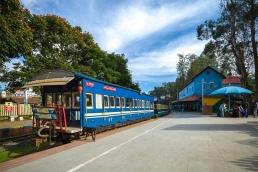
Ooty also known as Udhagamandalam is the “Queen of hill stations” and the capital of Nilgiris district. It is situated at an altitude of 2,240 meters above sea level and is one of the most popular tourist resorts in India. Ooty used to be popular summer and weekend getaway for the Britishers during the colonial days. An added attraction for the tourists to Ooty is the mountain train journey on a ratchet and pinion track which commences from Kallar, near Mettupalayam and wends its way through many hair-raising curves and fearful tunnels and chugs along beside deep ravines full of verdant vegetation, gurgling streams and tea gardens.
Day 4: Mudumalai
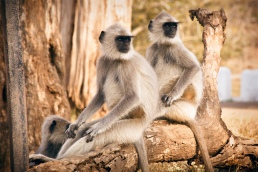
The Famous Mudumalai wild life Sanctuary is situated at an elevation of 1000 metres and extends over an area of 321 square metres. This sanctuary lies between the states of Kerala and Karnataka. Nature has been lavish in providing this sanctuary with thickly wood hills, plateaus, deep valleys, waterfalls, rivers, marshes and streams. The Mudumalai Sanctuary, rich in bio-diversity and dense vegetation, is sandwiched between the Bandipur and Annamalai sanctuaries, and together, the three of them form the Nilgiri Biosphere Reserve in the Western Ghats.
Day 5: Kabini
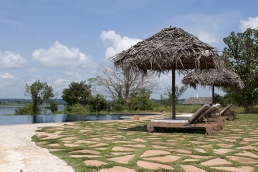
Kabini is one of the most popular wildlife destinations, probably because of its easy accessibility, lush green landscape surrounding a large picturesque lake, and fantastic sightings of large herds of elephants. It is 80 km away from Mysore and 205 km from Bangalore, and comprises the south-eastern part of Nagarole National Park. Situated on the banks of River Kabini, this forest reserve is spread over 55 acres of forestland. It was once a private hunting lodge of the Maharaja of Mysore. Now it is considered to be one of the best wildlife sanctuaries in India, famous for its spectacular wildlife and bird life.
Day 6: Bangalore
Transfer to Bangalore and proceed to onward destination.

Temple Tours
TEMPLE TOURS
Duration: 5 Nights/6 Days
Places: Chennai → Pondicherry → Kumbakonam → Tanjore → Trichy → Madurai → Chennai
Day 1: Chennai
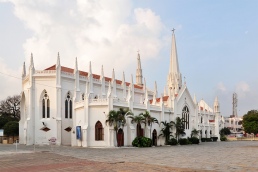
Chennai city, like the state of Tamil Nadu, is known for some awe inspiring temples. The Kapaleeswarar Temple is a very ancient temple. The original temple was submerged under the sea & the current temple structure was a later construction. This temple is an emblem of Dravidian style and architecture. The notable feature of this structure is the 37-meter tall gopuram. As you enter the temple you can view a sculpture, which has an interesting story behind it. It is believed that a saint known as Gnanasambandar sung and brought a dead girl back to life.
Day 2: Pondicherry
Pondicherry is a place of attraction for many faiths. The city has a number of temples, churches and other spiritual places but the most popular attractions being the Sri Manakula Vinayagar Temple, the Sri Aurobindo Ashram and Auroville. The Sri Manakula Vinayagar Temple is more than 300 years old and is dedicated to Lord Ganesha. It has a golden spire and walls portraying forty different forms of Lord Ganesha. The temple compound also plays host to ‘Lakshmi’, the temple elephant, who uses her trunk to dispense blessings and to collect coins from the devotees.
Day 3: Kumbakonam
Kumbakonam is famous for its festival of Mahamaham which is celebrated every 12 years at the Mahamaham tank in Kumbakonam. The town is known for its temples, intricately carved panchaloha idols, exquisite brass wares especially lamps, silk and betel leaves. Of the many temples in Kumbakonam, the most striking is the Lord Sarangapani Temple, a Vaishnavite temple. This twelve storied 147 feet high temple was built by the Nayak Kings during 15th century. The Ramaswamy Temple which depicts the paintings of Ramayana is another important Vaishanavite temple in Kumbakonam.
Day 4: Tanjore
Thanjavur or Tanjore, is well-known throughout the world for being the home of the Brahadeeswara temple. The temple is enclosed in two courts, surmounted by a lofty tower and includes the exquisitely decorated shrine of Subrahmanya. Among the other historic buildings is the Vijayanagar fort, which contains a palace that was expanded by the Maratha king with an armoury, a Bell Tower and the Saraswathi Mahal Library, which contains over 30,000 Indian and European manuscripts written on palm leaf and paper.
Day 5: Trichy & Madurai
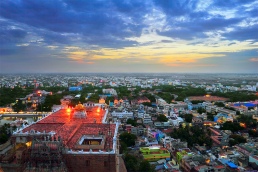
Trichy is known for its ancient temples like the Rock Fort, Srirangam & Thiruvanaikovil. The most famous is the Rock Fort Temple, a spectacular monument perched on a massive rocky out crop that towers over the old city. Madurai has functioned as an important commercial center as early as 550 AD and was the capital city of the Pandya kings of South India. The Meenakshi-Sundareswarar temple, which stands today as one of India’s cultural and architectural landmarks, was originally built by the early Pandya King Kulasekara. The ancient city of Madurai was supposed to be laid out in a lotus-like formation.
Day 6: Chennai
Transfer to Chennai and proceed to onward destination.